
 en
en


Flash dryer for cellulose

Brief description of cellulose materials:
Colorless or white crystals, granules or powder. No smell. Taste bitter. Hard. Stabilize in the air. 1g is dissolved in 8.3 ml of water, 4ml of boiling water, 75ml of glycerol, and is insoluble in ethanol. Potassium chloride and ammonium sulfate can increase their solubility in water, but they are hardly soluble in saturated solutions of ammonium sulfate. The aqueous solution is neutral and has a pH of about 7. Relative density 2.66. Melting point is 1067℃. The main uses include biochemical testing of serum proteins, catalysts for Kjeldahl nitrogen determination, preparation of other potassium salts, chemical fertilizers, drugs, preparation of glass, alum, etc.
Role of cellulose materials:
Cellulose is an ancient and rich natural polymer on the earth. It is an inexhaustible and precious natural renewable resource for mankind. Cellulose chemistry and industry began more than 160 years ago and was the main research object during the birth and development of polymer chemistry. The research results of cellulose and its derivatives have made significant contributions to the creation, development and enrichment of polymer physics and chemistry.
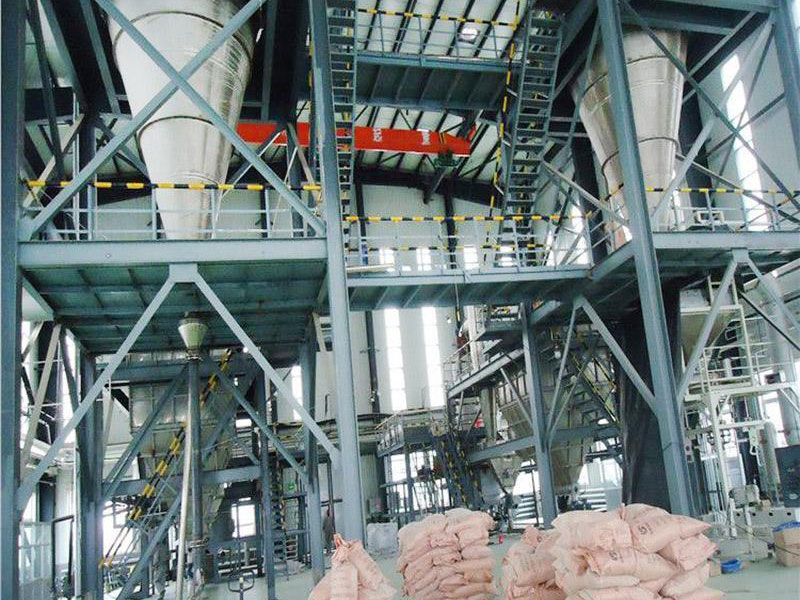
Working principle of cellulose special flash dryer:
Hot air tangentially enters the bottom of the dryer and is driven by the agitator to form a powerful rotating wind field. The paste material enters the dryer from the screw feeder. Under the strong action of the high-speed rotating stirring paddle, the material is dispersed under the action of impact, friction and shear force. The block material is quickly crushed, fully contacted with the hot air, heated, and dried. The dehydrated dry material rises with the hot air flow. The classification ring retains the large particles. The small particles are discharged out of the dryer from the center of the ring and recovered by the cyclone separator and the dust remover. The dry or large materials are thrown towards the wall of the device by centrifugal force., fall back to the bottom and are crushed and dried.