
 en
en


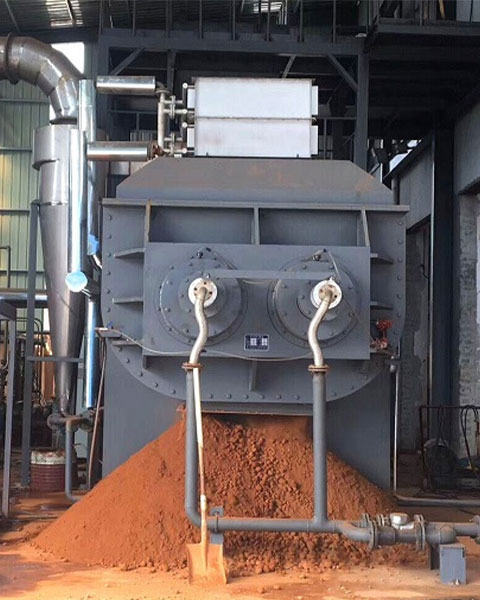
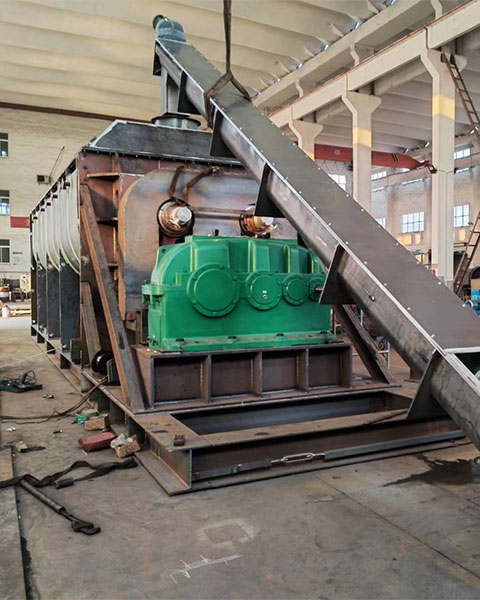
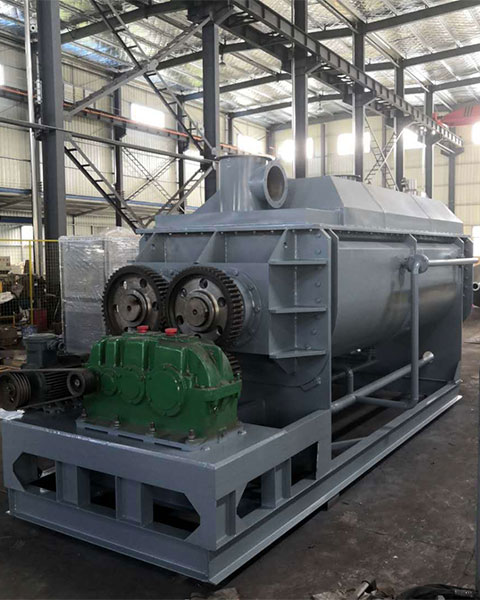
Industrial sludge paddle dryer
product Overview
Industrial sludge refers to the sludge produced by industrial wastewater treatment stations. Generally, there are more inorganic sludge and contains chemical components in production wastewater and belongs to hazardous waste. The treatment of industrial sludge is dehydration-select disposal methods-recycling, isolation landfill, and harmless incineration. The treatment of industrial sludge is a major problem; there are several methods for sludge dehydration, such as plate and frame, bag, centrifugation, drying, and natural drying. Choosing the appropriate dehydration method according to the nature of wastewater is a key link; in addition, according to the composition of the dehydrated sludge, the choice is recycling, landfill or incineration.
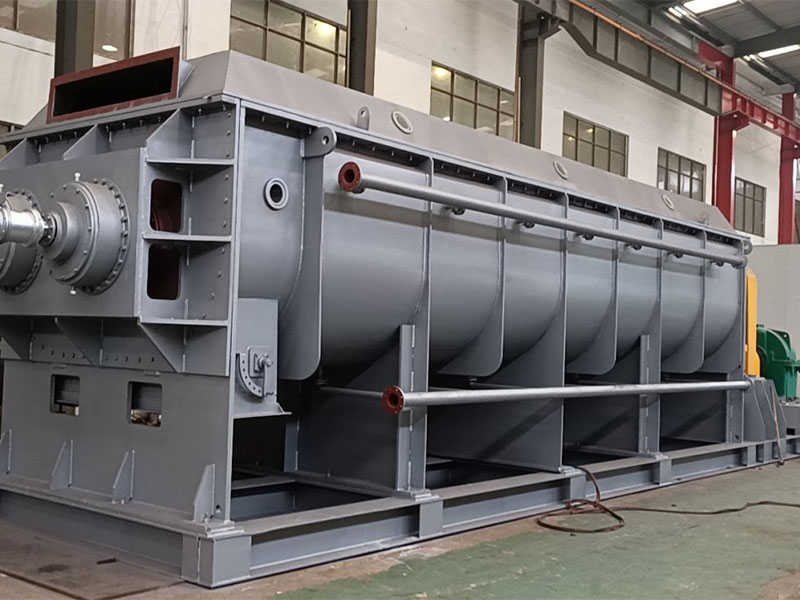
industrialsludgepaddle dryerprinciple
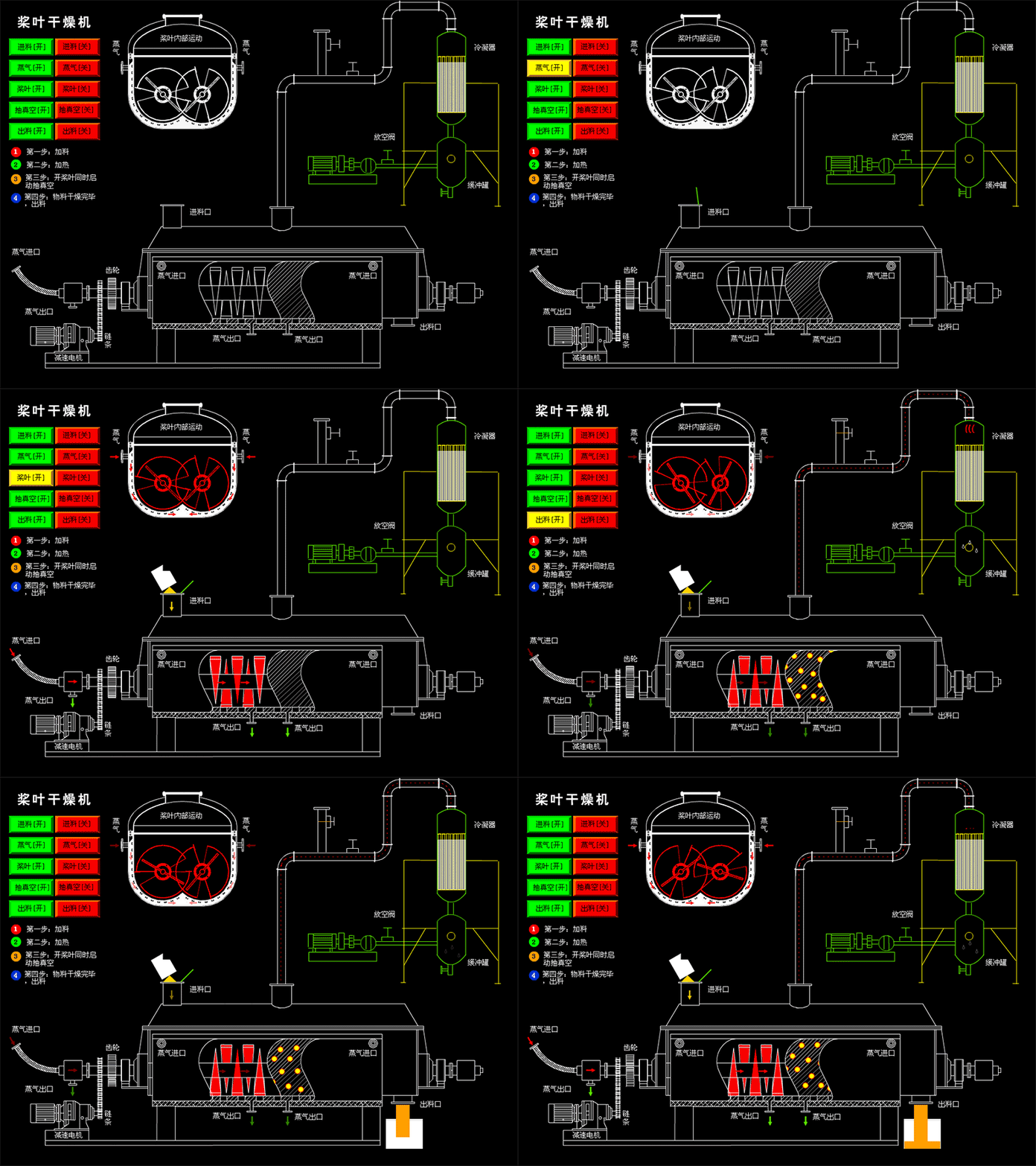
Blade dryers are available in hot water, steam, heat transfer oil and other media types. A rotary joint is installed at the end of the shaft to guide and introduce heat medium. The heating medium is transferred from both sides into the paddle shaft cavity and the shell jacket, and the paddle shaft and the machine itself are heated at the same time. Through conduction of heat, the wet material is dried. The wet material is continuously sent to the feeding place through the screw conveyor, and is driven by the paddle blades to stir and rotate, allowing the material to come into contact with the paddle blades and the body to evaporate the water in the material as soon as possible to fully dry the material. After the blade rotates, the material is sent to the discharge point. During the transfer, the material is still stirring and the water in the sludge is constantly evaporated.
industrialSludge paddle dryerstructural characteristics
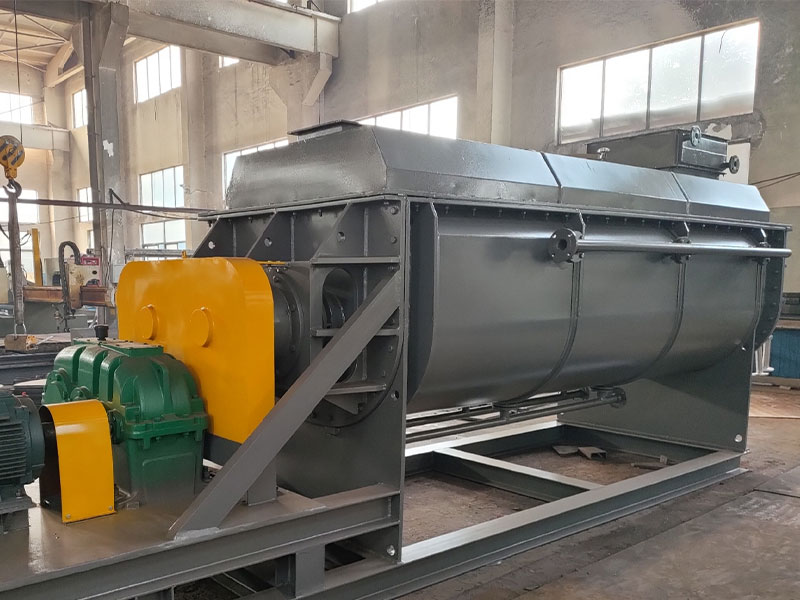
1、The pulp dryer has low energy consumption: Due to indirect heating, there is no large amount of air carried to carry away heat, and the equipment is very energy-saving.
2、The blade dryer system has low cost: it has a huge heat transfer surface per unit effective volume, shortening processing time and greatly reducing building area and building space.
3、Wide range of materials processed: using different heat media, you can process not only heat-sensitive materials, but also materials that need to be processed at high temperatures. Commonly used media include: water vapor, heat transfer oil, hot water, cooling water, etc. It can be operated continuously or intermittently, and can be used in many fields.
4、Low environmental pollution: no carrying air is used, and there is little entrained dust materials.
5、Stable operation: Due to the special compression-expansion stirring effect of the wedge-shaped paddle blades, the material particles are fully in contact with the heat transfer surface. In the axial range, the temperature, humidity, and mixing degree gradient of the material are small, thus ensuring the stability of the process.
industrialSludge paddle dryeradvantages
Using a pulp leaf dryer to dry sludge, the overall operation is relatively safe, reliable and stable, can reduce the amount of sludge, and the emission of pollutants after treatment meets the requirements of emission regulations; using a pulp leaf dryer to dry sludge has low investment costs, not only low energy consumption, but also small equipment floor area; This technological treatment technology is simple to operate and flexible in operation methods. It can adjust operating parameters accordingly according to different seasons and ambient temperatures. In addition, it also facilitates automated control of the sludge treatment process and optimizes management quality levels.
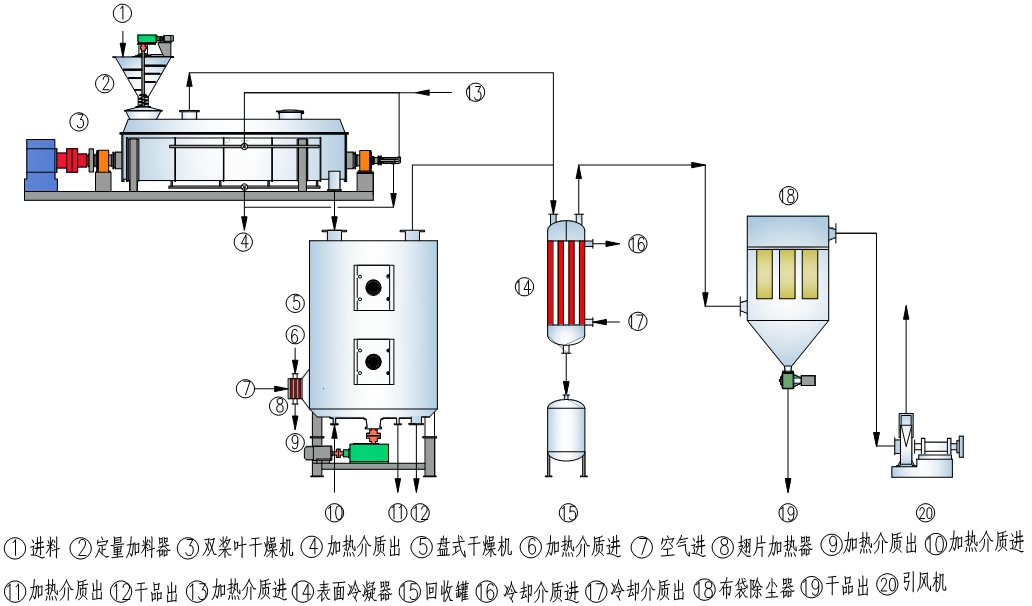
industrialSludge paddle dryerflowchart
technical specifications
| Project/Model | JYG3 | JYG9 | JYG13 | JYG18 | JYG29 | JYG41 | JYG52 | JYG68 | JYG81 | JYG95 | JYG110 |
| Heat transfer area (m2) | 3 | 9 | 13 | 18 | 29 | 41 | 52 | 68 | 81 | 95 | 110 |
| Effective volume (m3) | 0.06 | 0.32 | 0.59 | 1.09 | 1.85 | 2.8 | 3.96 | 5.21 | 6.43 | 8.07 | 9.46 |
| Speed range (rmp) | 15-30 | 10-25 | 10-25 | 10-20 | 10-20 | 10-20 | 10-20 | 10-20 | 5-15 | 5-15 | 5-10 |
| Power (kw) | 2.2 | 4 | 5.5 | 7.5 | 11 | 15 | 30 | 45 | 55 | 75 | 95 |
| Body width A(mm) | 306 | 584 | 762 | 940 | 1118 | 1296 | 1476 | 1652 | 1828 | 2032 | 2210 |
| Overall width B(mm) | 736 | 841 | 1066 | 1320 | 1474 | 1676 | 1854 | 2134 | 1186 | 2438 | 2668 |
| Body width C(mm) | 1956 | 2820 | 3048 | 3328 | 4114 | 4724 | 5258 | 5842 | 6020 | 6124 | 6122 |
| Overall length D(mm) | 2972 | 4876 | 5486 | 5918 | 6808 | 7570 | 8306 | 9296 | 9678 | 9704 | 9880 |
| Material inlet and outlet distance E(mm) | 1752 | 2540 | 2768 | 3048 | 3810 | 4420 | 4954 | 5384 | 5562 | 5664 | 5664 |
| Center height F(mm) | 380 | 380 | 534 | 610 | 762 | 915 | 1066 | 1220 | 1220 | 1220 | 1220 |
| Overall height H(mm) | 762 | 838 | 1092 | 1270 | 1524 | 1778 | 2032 | 2362 | 2464 | 2566 | 2668 |
| Steam inlet N(inch) | 3/4 | 3/4 | 1 | 1 | 1 | 1 | 11/2 | 11/2 | 11/2 | 11/2 | 2 |
| Water outlet O(inch) | 3/4 | 3/4 | 1 | 1 | 1 | 1 | 11/2 | 11/2 | 11/2 | 11/2 | 2 |
The hollow blade dryer equipment can indirectly heat or cool paste, granular, powder, and slurry materials, and can complete unit operations such as drying, cooling, heating, sterilization, reaction, and low-temperature combustion. The special wedge-shaped stirring heat transfer blades in the equipment have high heat transfer efficiency and self-cleaning function of the heat transfer surface. Paddle dryers are divided into hot air dryers and conduction dryers